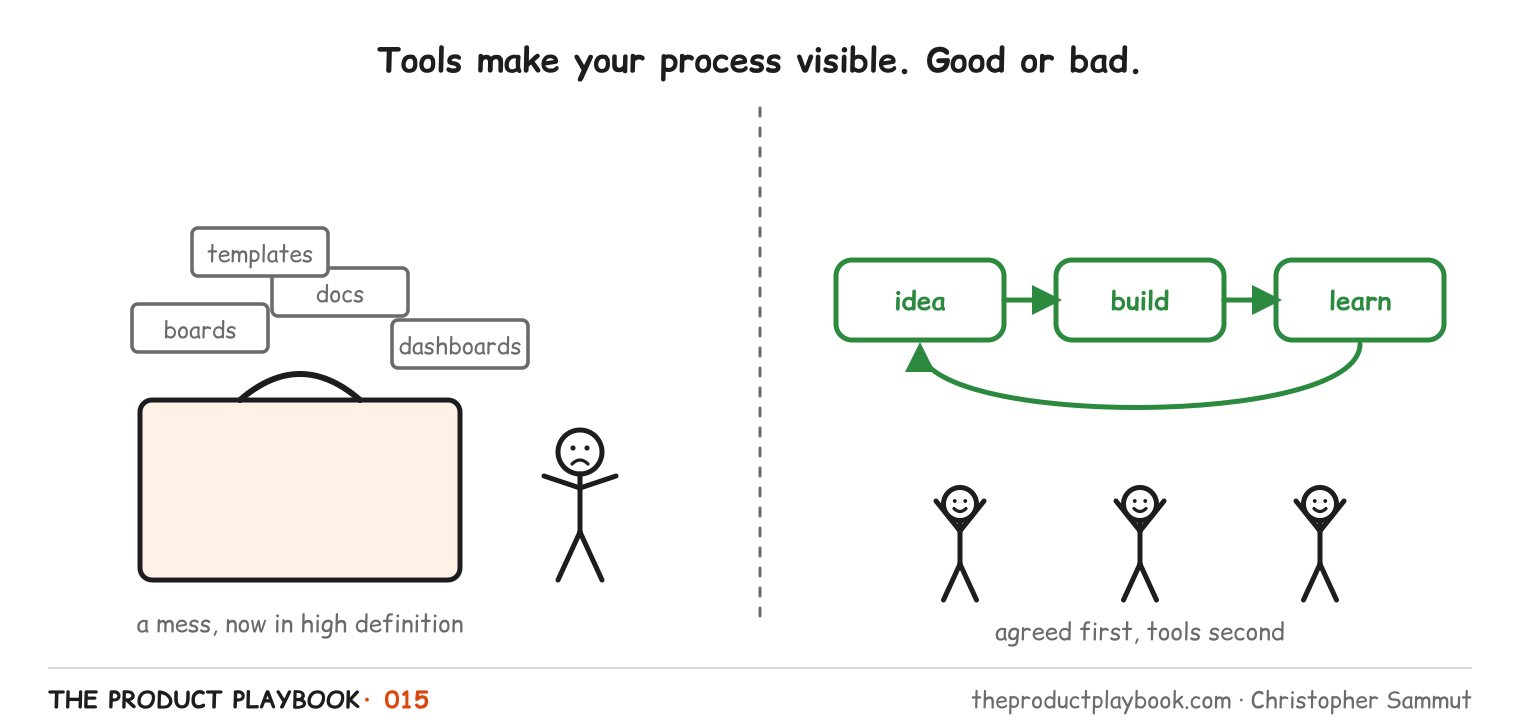
In my early product days I loved tools: Jira boards, Confluence spaces, analytics dashboards, the latest prioritisation template. I thought the right tool would fix the team. It never did.
What fixed teams was process: agreed ways of working that everyone understood and believed in. Who decides what. How work gets from idea to live. What “done” means. How we learn from what we ship.
When I helped drive the rollout of Jira and Confluence across a company of about 350 people, the teams that benefited were the ones that had agreed how they worked first. The tool just made a good process visible. For the others, it made a messy process visible, which is useful, but not the same as fixing it.
A good process is:
- Simple enough to explain to a new joiner in ten minutes.
- Owned by the team, not imposed by someone who doesn’t do the work.
- Light on approvals, heavy on clarity.
- Reviewed regularly. A process that never changes is probably being ignored.
Then pick tools that fit the process, not the other way round. Tools change every few years. Good habits last.
I come back to this question with AI in mind in chapter 020. The short answer: the lesson holds, and it matters even more when tools can run your process at machine speed.
When I once wrote down what I expect from a product leader, two lines stuck with me: set the stage for collaboration and delivery, then find what gets in the way and remove it. Good process is simply how you do the second part, again and again.
The question to ask yourself: if every tool my team uses disappeared tomorrow, would we still know how we work?