When I first outlined this playbook, this chapter was called “What’s an empath?” It felt a bit soft for a product book. Years later, I think it might be the most important one.
At an online casino operator I worked at, we ran user testing and consumer insights alongside our growth experiments across 11 markets. The numbers told us what players did. Watching a real person struggle through a registration form told us why. Both mattered, but only one of them made the team care.
Empathy in product isn’t about being nice. It’s a working tool:
- Feel the friction yourself. Sign up for your own product as a new user, on a slow phone, in a second language. Then do it for your competitor’s.
- Listen for what isn’t said. Users rarely tell you the real problem. They tell you a symptom, or a solution they’ve imagined.
- Remember your colleagues are users too. If you build internal tools, the support agent or the content editor is your customer. Treat their frustration with the same respect.
- Separate empathy from agreement. Understanding why someone wants something doesn’t mean you have to build it.
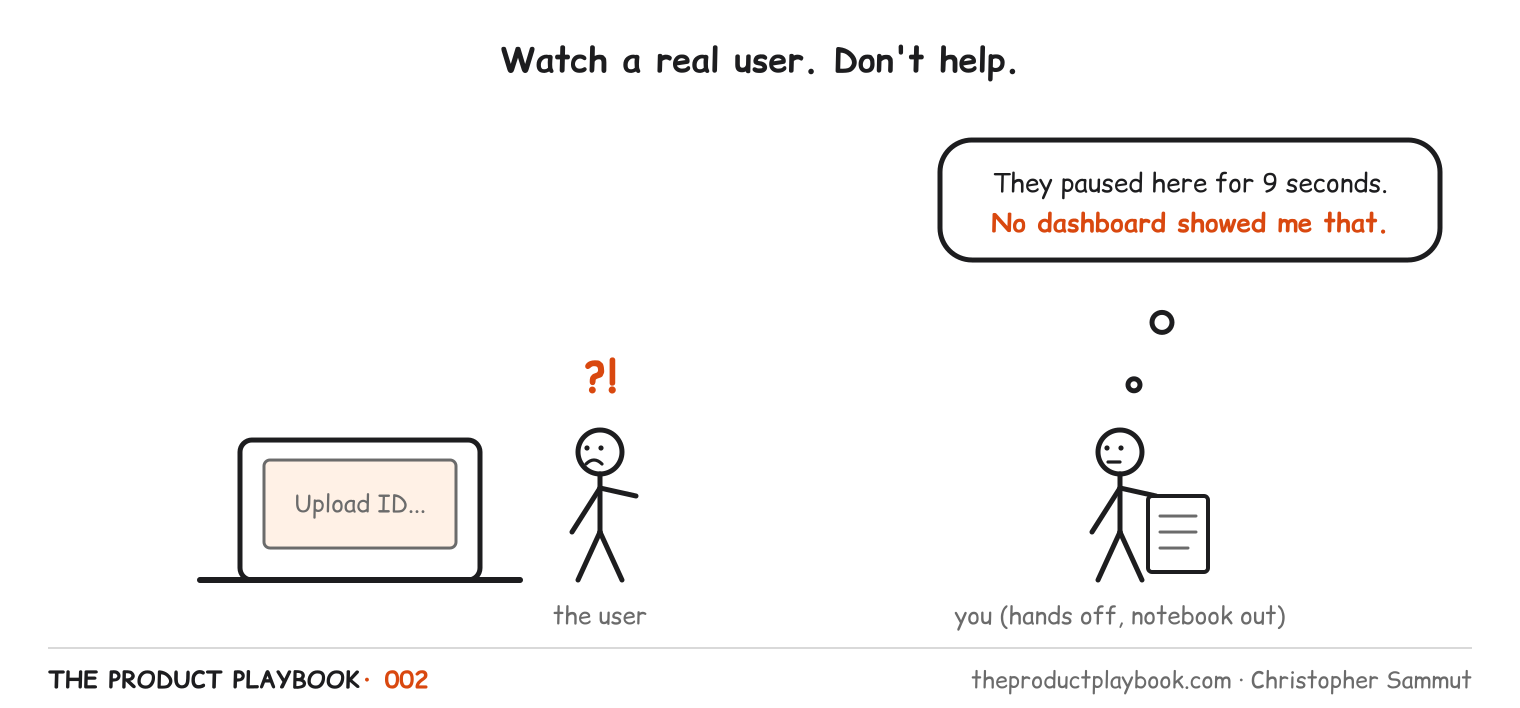
The trap is thinking dashboards replace conversations. They don’t. The best insights I’ve seen came from someone on the team sitting next to a user and noticing a pause, a frown, or a workaround nobody had reported.
When 100 users complain
A question I’ve been asked in more than one interview: you ship a feature and over 100 users complain it’s hard to use. What do you do? My answer hasn’t changed in years:
- Scan the feedback for patterns, so it becomes something you can act on rather than noise.
- Go deeper into the problem. Time and time again, we rush to fix the solution instead of understanding the problem.
- Talk to the users directly. Run test scenarios, ask for more detail, and put the fix in a beta before rolling it out.
The question to ask yourself: when did I last watch a real user use my product, without helping them? If it’s been more than a month, book it this week.